If you’re looking for an interesting bird to add to your flock, the Barnevelder chicken breed, or ‘Barneys’ as they are endearingly called, may be the one for you. This Dutch bird is known for its beauty, intelligence, and friendly disposition. In this article, we will discuss everything you want to know about them, including their history, temperament, and egg-laying.

In This Post
History of the Barnevelder Chicken Breed
| Class | Continental |
| Type | Standard |
| Size | Heavy – 7-9 pounds |
| Rarity | Uncommon in U.S. |
| Purpose | Dual |
| Recognized Varieties | Double Laced, Greenish-black and dark gold feathers |
Barnevelders are a heritage breed and are currently on the watch list at the Livestock Conservancy. They are considered uncommon in the United States but are the most popular dual-purpose breed of chicken in Holland. They have been there since the 13th century.
They get their name from Barneveld, located southeast of Utrecht, home to a major agricultural school specializing in poultry.
The egg market was huge, and the region was known for supplying eggs to Europe. Because most of England desired brown shelled eggs at that time, it became necessary to develop a bird that produced dark brown eggs so that farmers could meet the demands.
The Langshan breed was used in breeding the Barnevelder chicken, as well as Malays and Brahmas. Gold Laced Wyandottes were added to the mix in 1898, but there was still much variation among different Barnevelder strains. However, there is no definitive agreement on the lineage, as different people have various ideas about it.

In 1923, the Barneveld Breeders Association was formed and helped the breed to be standardized. In the Barnevelder district, out of approximately 100,000 birds, only 2,000 were judged to have excellent qualities for breeding.
The Barnevelder chicken breed is a soft-feathered, heavy breed. In 1991, the double-laced Barnevelder was recognized by the American Poultry Association, which categorized it as “continental.”
The most common and popular “double-laced” variety was created by crossing Dutch chickens with Asian breeds. The breeders started with single-laced feathers and then developed the double lacing that the breed is known for today.
In Holland, the only variety standardized is the double-laced, greenish-black, and dark gold feathers.
Partridge and double-laced were the original colors, but most breeders believe the partridge variety is extinct.
The American Poultry Association only recognizes the double-laced, greenish-black, and dark gold feathered Barnevelders.
Today, Barnevelders chicken is considered a heritage breed and are also prized for their egg-laying abilities. They are also known for being friendly and docile, making them a good choice for backyard flocks.

Egg Facts
| Egg Laying | 200-250 a year/3 – 4 weekly |
| Egg Color | Dark brown to light brown |
| Egg Size | Large |
The color quality of the egg has deteriorated over time. The plumage was developed with care, but the egg coloring has faded from chocolate to dark or even light brown, as seen today.
Barnevelder chickens are known for being good egg-layers. They typically lay between 200 and 250 large, dark brown eggs per year, or 3 – 4 eggs a week.
Like most other breeds, their egg production may slow down during the winter months, but they will continue to lay throughout the winter.

Features
| Comb Type | Single |
| Crested | No |
| Feathered Legs | No |
| Number of Toes | 4 |
Although several colors and shadings are now available, the only APA-recognized variety is the double-laced, greenish-black, and dark gold feathers.
Other available colors or shadings:
- Double Laced Silver
- Double Laced Blue
- Silver Blue
- Chamois
- White
- Black
Barnevelders may also be found in bantams, although they are not readily available from breeders. The standard does not recognize the bantams. Many of today’s brighter colors have “bleeding” problems, which can destroy the appearance of the bird.
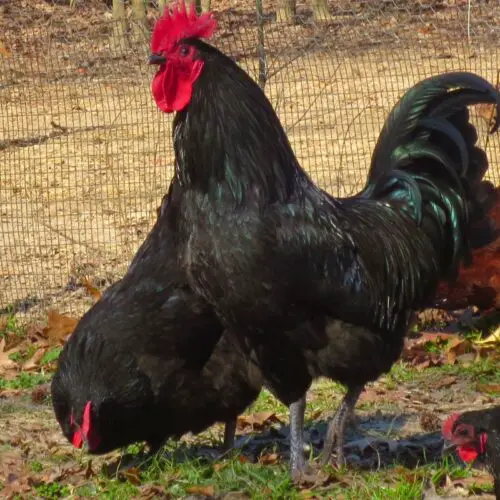
The roosters have a black breast and tail with some red coloring possible in the hackle and saddle, similar to the Partridge Plymouth Rock. To me, the Barnevelder chicken hens only slightly resemble the Partridge Rock hen.
The Barneys have yellow skin, a single comb, and red ear lobes.
Barnevelders are a medium to heavy breed, with roosters typically weighing 8-9 pounds and hens 6-7 pounds.

Barnevelder Chicken Breed Characteristics
| Cold Hardiness | Yes |
| Heat Tolerance | Yes, If provided shade and water |
| Bears Confinement | Some |
| Especially Docile | Yes |
| Setter/Broody | Often |
| Personality | Friendly, Happy |
Barnevelders are an intelligent breed and are known for being good escape artists. They are also known to be friendly and docile, making them a good choice for backyard flocks.
Barney hens are laid-back birds who don’t get in fights with other hens; even the roosters are known to be peaceable.
Barnevelders are a lively breed of bird and prefer free-ranging, but can tolerate some confinement. They are pleasant, with contagious, happy dispositions, so they’re kid-friendly.
Barnevelder chickens are sturdy birds with few health problems. They can survive in a variety of weather conditions and seem to be undaunted by them.
Their homeland is known for the cold winds and dampness that sweep over it. This led to them being developed into a chicken breed that can withstand some cold, damp weather.
They don’t enjoy being hot and humid, but then who does! They will do well if shade and good water are provided.
Barnevelder chickens are robust birds. They are not known to be readily broody, but they will often set and hatch their eggs. They are known to be good mothers when they do hatch out a clutch of chicks.

Barnevelder Chickens For Sale – Where to Buy
Several hatcheries sell the Barnvelder breed. We always recommend checking with local poultry groups, farmers’ markets, and farm supply stores to try to get birds locally. This reduces the stress on the birds.
However, if you need to order them online, use a company you feel comfortable doing business with. I found them here for you.
FAQs For Barnvelder Chickens
What color are Barnevelder chicken eggs?
Today, the egg coloring of barnevelder chicks has faded from a more historic chocolate to a dark or even light brown.
What is the Barnevelder lifespan?
The average lifespan of the Barnevelder chicken breed is 5 to 8 years old, but they can sometimes live up to 12 years.
Summary
The Barnevelder chicken breed is a heritage breed currently on the Livestock Conservancy’s watch list. They are considered uncommon in the United States but are common in Europe.
They have lively, friendly, happy dispositions. They can be kept by children who have an interest in chicken keeping or even 4-H show animals.
They are good layers of large, dark brown eggs. While they aren’t known for being broody, they will often set and hatch a clutch of chicks. They are known to be good mothers when they do hatch out.
Is the Barnevelder right for your backyard flock?