Clipping chicken wings is one of the first things folks reach for when a hen keeps landing on the wrong side of the fence. It feels like the obvious fix. Before you pick up the scissors, though, there is a better question worth asking, and it starts with why she is leaving in the first place.
- Why Chickens Fly Over Fences (It Is Usually Not Wanderlust)
- What to Check Before Clipping Chicken Wings (Fix the Setup First)
- The Tradeoff Nobody Mentions (Flight Is a Defense)
- How Clipping Chicken Wings Actually Works (One Wing, Mature Feathers Only)
- The Honest Pros and Cons
- What If You're a New Chicken Keeper? (And What I Would Tell You)
- FAQs: Clipping Chicken Wings
- Does clipping chicken wings hurt the chicken?
- Should I clip one wing or both?
- How often do I need to clip a chicken's wings?
- Can a chicken with clipped wings still get over a fence?
- At what age can you clip a chicken's wings?
- Is there a way to keep chickens in without clipping their wings?
- Do clipped wings make chickens more vulnerable to predators?
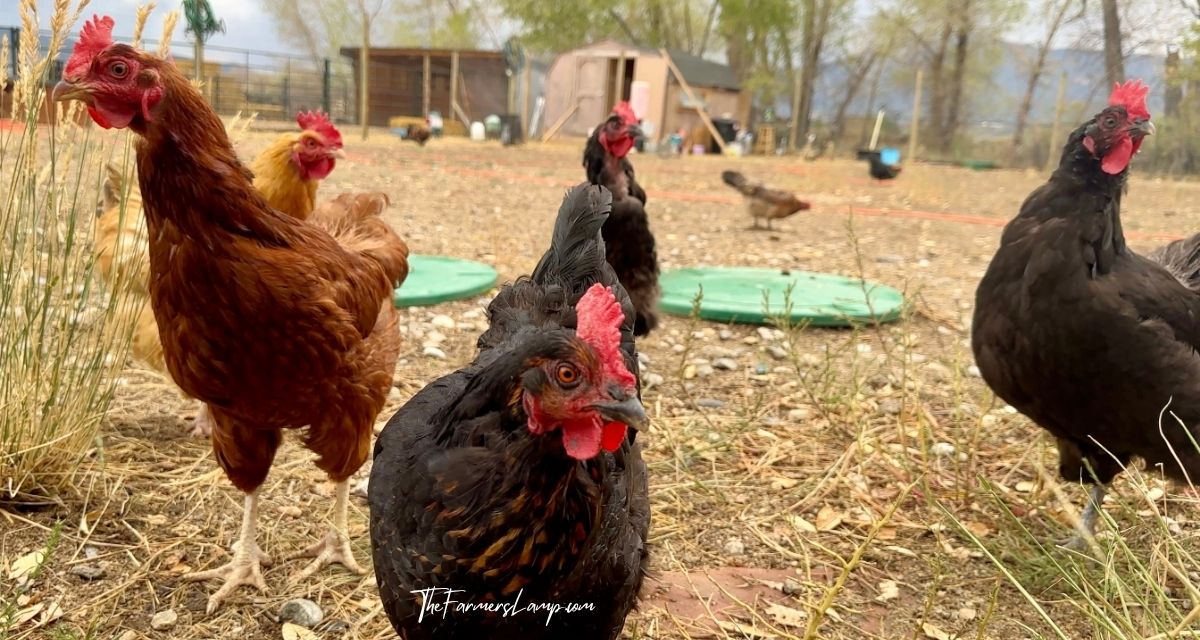
I met some new chicken keepers recently who took in flocks orphaned by wildfire. They had never kept a chicken in their lives, and these warm-hearted folks are doing an absolutely wonderful job.
The friendly birds looked healthy and settled; they had built a solid coop for nights, run good fencing, set up feeding, water, and shade. They even have the sweetest donkeys who seem to have decided the flock is their responsibility now. One of them took out a skunk not long ago!
But what worried them was the escape artists in their new flock, and they were thinking about how to keep the birds safer. They live where predators are a real and daily concern, and the thought of a hen sailing over that fence line kept them up at night.
So they asked me the question a lot of new keepers ask: does clipping chicken wings hurt the bird, and should we do it?

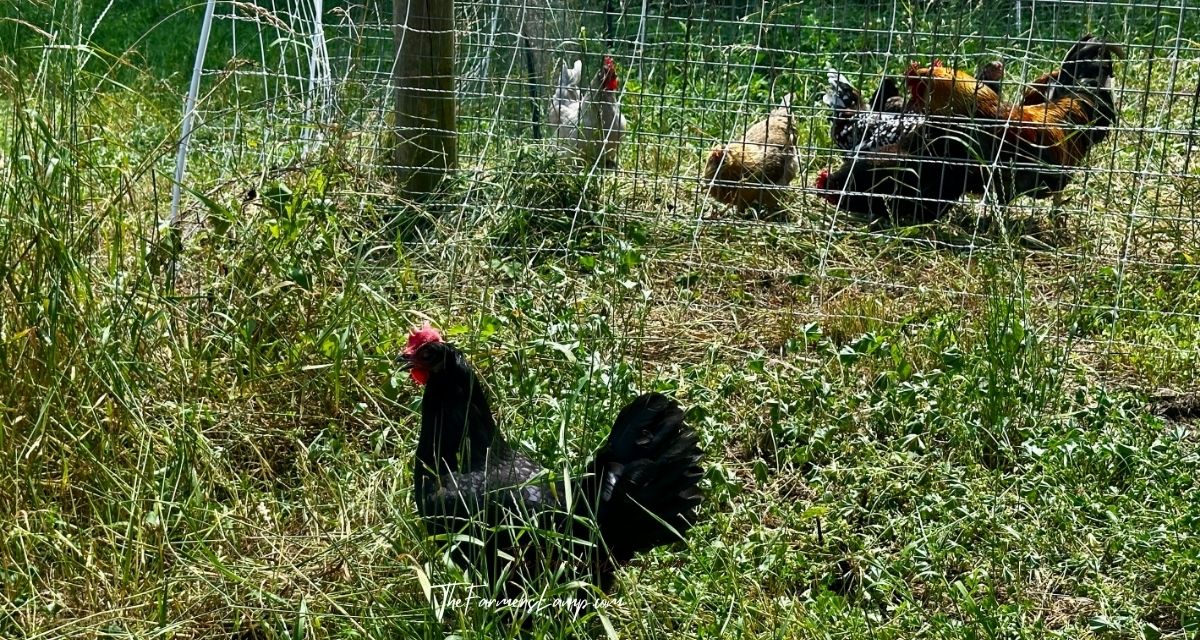
Why Chickens Fly Over Fences (It Is Usually Not Wanderlust)
A chicken does not scale a fence for the fun of it. She is going somewhere, and she almost always has help getting there.
Most escapes come down to three things:
- There is something to launch from
- There is not enough going on inside the run
- The fence is simply shorter than the bird’s ambition. Lighter breeds like Leghorns and most bantams can clear a four-foot fence without much effort. Heavier breeds rarely bother.
Boredom is the piece people miss. Hens kept in a tight space with nothing to scratch, dust bathe in, or pick at will spend their day studying the fence line. Give them work to do, and the fence gets a lot less interesting.
What to Check Before Clipping Chicken Wings (Fix the Setup First)
At The Farmer’s Lamp we lean toward changing the enclosure before we change the bird. Walk your run and look for these things.
- Launching pads. Feeders, waterers, stumps, buckets, hay bales, low roosts, and the coop roof itself. Anything within a few feet of the fence is a step stool. Move it to the center.
- Fence height. Four feet stops a heavy breed and almost nothing else. Six feet is a better target if you keep light breeds.
- Overhead cover. Bird netting or poultry wire across the top of the run solves the flying problem completely, and it keeps hawks and owls from solving it their own way.
- Space and stimulation. Room to move, a dust bathing spot, a pile of leaves to shred, a hanging cabbage in winter. Busy hens stay home.
- What is on the other side. Sometimes she is going toward something. A garden, a compost pile, a neighbor who tosses scratch. Remove the reason and you remove the trip.
When you look around your fence line, what did you notice? Where are the feeders set? What’s up against or near the fence?
The Tradeoff Nobody Mentions (Flight Is a Defense)
This is the part I want new keepers to sit with.
A chicken’s ability to get airborne is not a bug in your fencing plan. It is her escape hatch. A hen who can flutter up onto a low branch, a fence rail, or the coop roof has a real chance of surviving a dog, a fox, or a bobcat that gets into the yard. Take that away, and she is on the ground with whatever found her.
That does not mean never clip. It means understand what you are trading. If you reduce a bird’s flight, you have taken on more responsibility for her protection, not less. Secure fencing, a locked coop at night, and predator barriers matched to what actually lives in your area become more important, not less. If you are still sorting out your own predator plan, start with a solid predator-proofing checklist before you touch a single feather.
How Clipping Chicken Wings Actually Works (One Wing, Mature Feathers Only)
If you have fixed the setup and you still have one determined escape artist, clipping is a reasonable tool. Done right, it does not hurt.
You are cutting mature feathers, not the wing. It is like trimming hair or fingernails. The bird feels the tug, not pain. What you must never cut is a blood feather, which is a new feather still growing in with an active blood supply. It looks darker and fuller at the base, sometimes with a visible vein. Penn State Extension and other poultry programs are clear on this point: cutting a blood feather causes real bleeding and needs to be addressed right away.
Here is the process.
- Do it in the evening when the birds are calm and easy to gather off the roost.
- Have a second person hold the hen snug against their body, or wrap her lightly in a towel with one wing free.
- Spread that one wing out fully so you can see the long primary flight feathers, the ten or so longest feathers at the outer edge.
- Look at each one for a dark, blood-filled shaft. Skip any feather that has one and come back after it matures.
- Trim the primaries back by about half, using the shorter layer of covert feathers above them as your guide line.
- Clip one wing only. Cutting both keeps her balanced and still able to lift. One side throws off her lift and that is the whole point.
- Set her down gently and watch her for a few minutes. Most hens go right back to scratching.
Feathers grow back after each molt, so plan on repeating this roughly once a year.
The Honest Pros and Cons
What clipping gives you
- Cuts down on fence hopping for most birds, right away
- Costs nothing and takes a couple of minutes
- Does not hurt when done on mature feathers
- Reversible, since it grows back
What it costs you
- Reduces her ability to escape a ground predator
- Does not stop a determined bird who can hop to a launching point
- Has to be redone after every molt, so a chore added to your maintenance list
- Handling stresses some birds, especially skittish ones
- Fixes the symptom, not the reason she is leaving
What If You’re a New Chicken Keeper? (And What I Would Tell You)
Fix the run first. Clip second. Protect always.
If you are newer to all this and want the whole picture in one place, our guide to raising chickens for beginners walks through housing, feed, and flock health without assuming you already know the vocabulary. And if it is the predators keeping you up at night, our notes on choosing breeds will help, because temperament and flightiness vary a lot more than most folks expect.

FAQs: Clipping Chicken Wings
Does clipping chicken wings hurt the chicken?
No, not when it is done correctly. Mature flight feathers have no nerves or blood supply, so trimming them feels about like a haircut. The exception is a blood feather, which is a new feather still growing in with an active blood supply. Cutting one of those does hurt and will bleed, so check each feather before you cut.
Should I clip one wing or both?
One wing only. Clipping both wings leaves the bird balanced and still able to gain lift, which defeats the purpose. Trimming a single side throws off her balance when she tries to fly and usually keeps her on the ground.
How often do I need to clip a chicken’s wings?
Roughly once a year. Clipped feathers stay short until the bird molts and grows fresh ones, which is typically an annual event in the fall. Check your birds after each molt and re-clip only the ones who still need it.
Can a chicken with clipped wings still get over a fence?
Yes, some can. A light-bodied hen who can hop onto a bucket, stump, or feeder near the fence may still make it over. That is why moving launching pads away from the fence line matters as much as the clipping itself.
At what age can you clip a chicken’s wings?
Wait until the bird is fully feathered and mature, usually around four to six months old. Younger birds are still growing in flight feathers, which means more blood feathers and a higher chance of cutting one by mistake.
Is there a way to keep chickens in without clipping their wings?
Yes, and it is usually the better route. Raise the fence height, stretch bird netting across the top of the run, move feeders and objects away from the fence, and give the flock enough space and enrichment that they are not looking for a way out. Overhead netting has the added benefit of blocking hawks and owls.
Do clipped wings make chickens more vulnerable to predators?
They can. Flight is part of how a chicken escapes ground predators like dogs, foxes, and bobcats. If you clip, your fencing, coop security, and predator deterrents need to carry more of the load.
I would rather see you spend an afternoon on your run than two minutes with the scissors, but you know your birds and your property better than I do. If you have found something that works on your place, tell us about it in the comments. Somebody reading this is standing at their fence line right now trying to figure out the same thing.
Want more chicken keeping help like this? Become a Friend of the Farmer’s Lamp for free. Join The Farmer’s Lamp newsletter to get homestead support from folks just like you.