
Updated October 6, 2025, to clarify steps in the recipe.
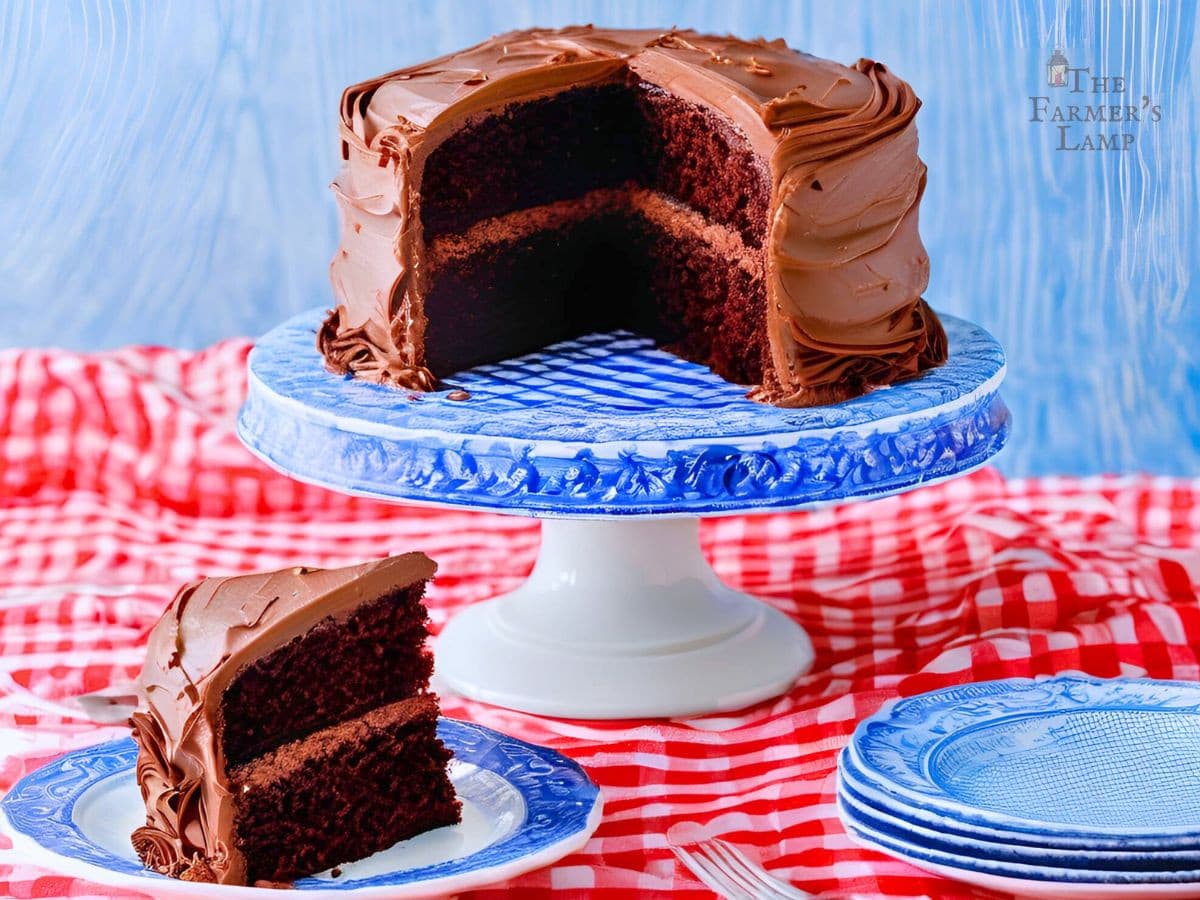
Einkorn chocolate cake is a dessert that delivers rich chocolate flavor and a moist, tender crumb that’s hard to resist. This recipe perfectly balances indulgence and simplicity, making it a go-to option for any occasion. Whether you’ve baked with Einkorn before or are trying it for the first time, this cake will quickly become a favorite in your kitchen. Its deep chocolate taste and satisfying texture make it the perfect treat for family gatherings, special occasions, or just because you’re craving something homemade and delicious.
In This Post
Why Bake an Einkorn Chocolate Cake?
Einkorn chocolate cake has quickly become a favorite in our home, and it’s easy to see why. The rich, chocolatey flavor paired with the moist, tender crumb makes it one of the best chocolate cakes you’ll ever bake. Einkorn flour gives this cake a slightly nutty depth you don’t get with other flours, making each bite a perfect balance of indulgence and homemade goodness. Trust me, once you’ve tried it, you’ll be making it again and again!
What makes this cake even better is how gentle it is on the stomach. If you or your family members have struggled with modern wheat, you’ll likely find Einkorn much easier to digest. While it’s not gluten-free, many people with sensitivities to regular wheat find that Einkorn doesn’t cause the same gut issues, making it a great alternative. We’ve noticed the difference in our family, and it’s lovely to enjoy a chocolate cake without worrying about stomach discomfort afterward.
On top of being easier to digest, Einkorn flour is more nutritious than today’s standard wheat. It’s naturally higher in protein, vitamin B6, and antioxidants like lutein, so you can feel good about serving this cake to your family. It’s a treat that satisfies your chocolate cravings and brings a little extra nutrition to the table. I love baking with Einkorn—it’s as good for you as it is delicious.
Read our article for the best tips on using Einkorn flour.
Learn why we use Real Salt and why we choose the baking soda we use and recommend.
Making a Moist Einkorn Chocolate Cake
Equipment List:
- Two 9-inch round cake pans or one 9×13 cake pan
- Sifter or fine mesh sieve (for dry ingredients) (I have both of these and either one will work great)
- Measuring cups and spoons (My favorite set)
- Mixing bowls (small, medium, and large)
- Whisk
- Hand mixer or stand mixer
- Spatula (This is the wooden set I love – I don’t use silicone)
- Cooling rack
- Toothpick or cake tester
Ingredients (for Double-Layer or 9×13 Cake):
- 2 ¼ cups Einkorn flour (310.5 grams)
- 1 ½ cups sugar
- 3/4 cup unsweetened cacao powder or cocoa powder
- 1 tsp baking powder
- 1/2 tsp baking soda
- 1/2 tsp real salt (if you use unsalted butter, add 1 tsp of salt)
- 1 cup full-fat milk or buttermilk (I make my own buttermilk)
- 2 tsp apple cider vinegar (if you make your own buttermilk, leave this out)
- 3/4 cup melted salted butter ( I only buy Kerrygold butter)
- 2 large eggs, room temperature
- 1 Tbs vanilla extract
- 1 cup water
Instructions:
- Preheat your oven to 350°F.
- Grease and flour two 9-inch round cake pans or a 9×13 pan.
- If you’re making your own buttermilk, mix the milk and vinegar and let it sit for at least 5 minutes.
- Mix the dry ingredients by sifting together the Einkorn flour, baking powder, baking soda, and salt into a medium bowl. Set aside.
- Make the Chocolate Mixture by whisking the melted butter and cacao powder together in a small bowl or saucepan until smooth. Set this mixture aside to cool to room temperature (not cold, not warm.)
- Cream the Eggs and Sugar in a large bowl by beating the sugar and eggs together at medium speed on your electric mixer for at least 5 minutes, until pale and fluffy.
- This step is crucial for creating a light, airy texture in the cake.
- Combine the Chocolate Mixture and Creamed Eggs and Sugar Mix together by slowly whisking the room temperature Chocolate Mixture into the Creamed Eggs and Sugar Mix until fully incorporated and smooth.
- Mix the Remaining Wet Ingredients together in a separate small bowl. Whisk the buttermilk (or milk and apple cider vinegar), water, and vanilla extract. Make sure all wet ingredients are thoroughly combined. *Omit the apple cider vinegar (ACV) if you’re using store-bought or homemade buttermilk, as it already has the acid added. The ACV is only for when you’re just using plain milk.
- Gradually stir the Remaining Wet Ingredients Mixture into the combined Chocolate + Creamed Eggs and Sugar Mix.
- Finish the Batter by gently folding the sifted dry ingredients into the wet mixture until combined.
- Be careful not to overmix, as Einkorn’s gluten is more delicate than modern wheat, and overmixing can lead to a dense cake.
- Preparing to Bake:
- For a Double-Layer Cake, Evenly divide the batter between two prepared 9-inch round cake pans.
- For a 9×13-inch Cake, Pour all the batter into a prepared 9×13-inch cake pan.
- Once the batter is in the pan(s), gently lift each pan slightly off your countertop and give it a firm bang to remove any air pockets.
- Bake:
- Bake the 9-inch pans for 25-30 minutes. A toothpick inserted into the center should come out clean or with a few moist crumbs.
- For a 9×13 cake: Bake for 30-35 minutes, starting to check for doneness at the 30-minute mark using a toothpick test.
- If using a dark pan, reduce the bake times slightly; if using glass or ceramic, you may need to bake a bit longer.
- When the cake is done baking, remove it from the oven and let it cool in the pan on a wire rack for 10 minutes. Then, carefully remove the cake from the pan and place it on the rack to cool completely.
- If you plan on serving the 9×13 cake directly from the pan, let it cool completely in the pan before frosting and serving.
Assembling the Cake
- Make sure the cake layers are completely cooled before frosting.
- Place the first layer on your cake plate.
- Using a spatula, spread 1/2 to 3/4 cup of frosting evenly over the top.
- Add the second layer and spread the remaining frosting over the top and sides of the cake, covering it completely.
Storing the Cake
- You can store it, frosted or unfrosted, in the fridge for up to 4 days.
- If you prefer to freeze it, wrap it tightly and store it in the freezer for up to a month.
- If refrigerated, let the cake come to room temperature before serving so it’s soft, moist, and full of flavor.
Buttercream Frosting
- 3 sticks unsalted, grass-fed butter, softened (This is 1 1/2 cups)
- 1 pound powdered sugar
- 3-6 Tablespoons raw, organic cacao powder depending on how chocolatey you want it)
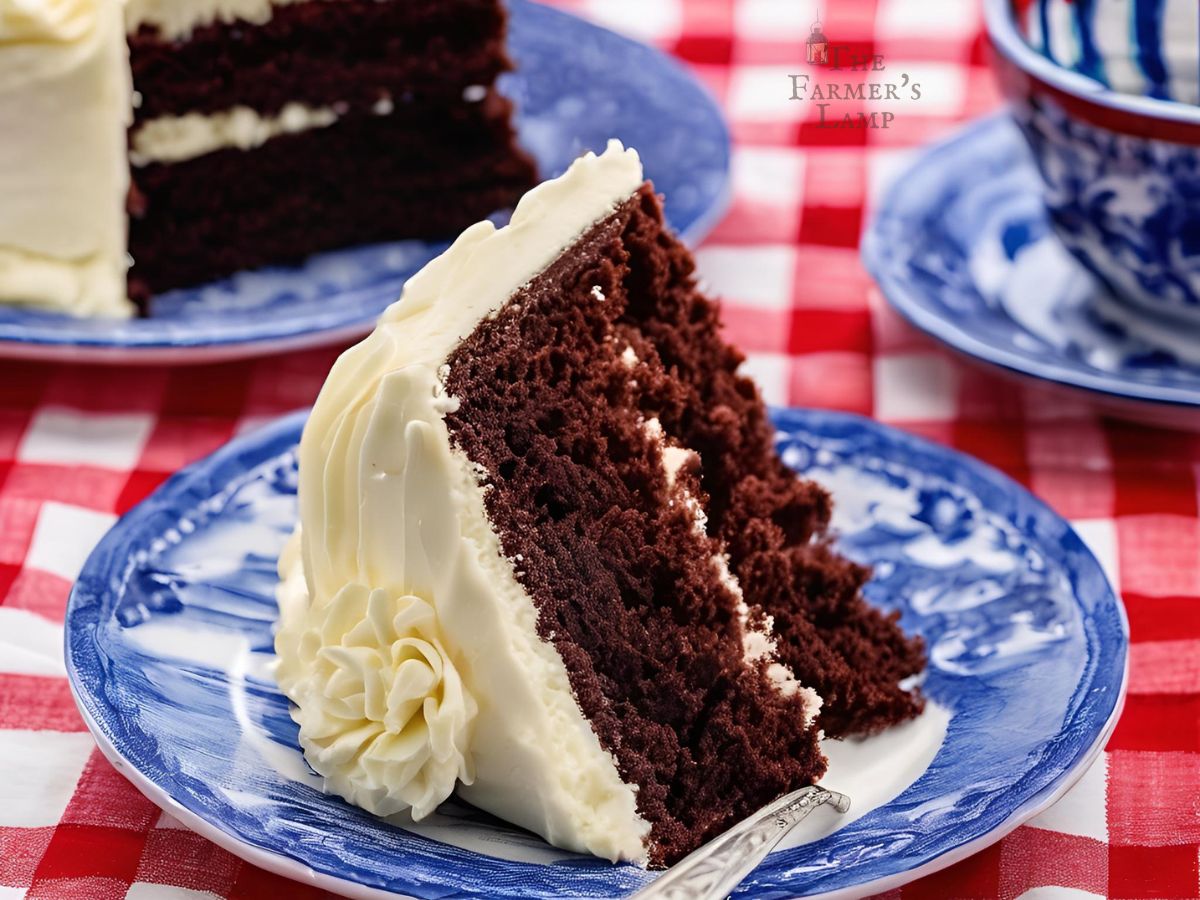
- If you prefer vanilla frosting (my husband loves it on a chocolate cake) omit the cacao powder
- 1 Tablespoon vanilla extract
- 1/4 cup water (use milk or heavy whipping cream for a richer frosting)
Instructions for Frosting
- Place the softened butter in a large bowl. (To save on cleanup, you can rinse and reuse the bowl you used for making the cake batter.)
- Beat the butter with an electric mixer on high speed for 10 minutes until it’s light and fluffy.
- I know this seems like a long time, but I just turn on my mixer and work on something else. The longer you beat it, the better the frosting – I promise!
- Gradually add the sugar, 1/2 cup at a time, while continuing to mix on high speed.
- Scrape down the sides of the bowl often to ensure everything is well incorporated.
- If the mixture starts to clump, add a small amount of water (or milk/cream) and continue adding the sugar.
- Be careful when adding the sugar to avoid it flying all over your kitchen—adding it slowly will help.
- Once all the sugar is added, mix in the vanilla and any remaining water (or milk/cream) a little at a time until you reach the desired consistency.
- For thinner frosting, add more liquid in small amounts (1/8 teaspoon at a time).
- For thicker frosting, stop adding liquid once the consistency is right.
- Now add the cacao powder, one tablespoon at a time, until it’s thoroughly mixed in.
- You can adjust the amount of cacao to get the chocolate flavor you want.
- If you prefer vanilla frosting, leave out the cacao powder.
Tips for Success:
- Room Temperature Ingredients: Always use room-temperature eggs and butter for smooth blending. This helps the cake rise better and keeps the texture light and fluffy.
- Don’t Overmix: Einkorn’s gluten is more delicate, so stir just until the ingredients are combined. Overmixing can lead to a denser cake.
- Adjusting Liquids: Einkorn absorbs liquids more slowly, so don’t rush to add more if the batter seems thick. Give it a moment to settle before making adjustments.

The Perfect Easy, Moist Einkorn Chocolate Cake Recipe
Equipment
- Two 9 inch cake pans OR one 9×13 cake pan
Ingredients
- 2 ¼ cups Einkorn flour 310.5 grams
- 1 ½ cups sugar
- ¾ cup unsweetened cacao powder or cocoa powder
- 1 tsp baking powder
- ½ tsp baking soda
- ½ tsp real salt if you use unsalted butter, add 1 tsp of salt
- 1 cup full-fat milk or buttermilk (I make my own buttermilk)
- 2 tsp *apple cider vinegar (ACV) *Only if using full-fat milk. If using your own buttermilk that you've already added an acid to, or store-bought buttermilk, leave the ACV out.
- ¾ cup melted salted butter I only buy Kerrygold butter
- 2 large eggs room temperature
- 1 Tbs vanilla extract
- 1 cup water
Buttercream Frosting
- 3 sticks unsalted grass-fed butter, softened (This is 1 1/2 cups)
- 1 pound powdered sugar
- 3-6 Tablespoons cacao powder (depending on how chocolatey you want it)
- If you prefer vanilla frosting my husband loves it on a chocolate cake, omit the cacao powder.
- 1 Tablespoon vanilla extract
- ¼ cup water (use milk or heavy whipping cream for a richer frosting)
Instructions
- Preheat your oven to 350°F.
- Grease and flour two 9-inch round cake pans or a 9×13 pan.
- If you’re making your own buttermilk, mix the milk and vinegar and let it sit for at least 5 minutes.
- Sift the Einkorn flour, baking powder, baking soda, and salt into a medium bowl. Set aside.
- Make Chocolate Mixture: Whisk the melted butter and cacao powder in a small bowl or saucepan until smooth. Set this mixture aside to cool to room temperature.
- Cream Eggs & Sugar: In a large bowl, beat the sugar and eggs together at medium speed on your electric mixer for at least 5 minutes, until pale and fluffy.This step is crucial for creating a light, airy texture in the cake.
- Combine Chocolate Mix and Creamed Eggs & Sugar: Slowly whisk the Chocolate Misture into the Creamed Eggs & Sugar Mix until fully incorporated and smooth.
- Mix Remaining Wet Ingredients: Whisk together the buttermilk (or milk and apple cider vinegar), water, and vanilla extract. Make sure all wet ingredients are thoroughly combined.
- Gradually stir the Remaining Wet Ingredients Mixture into the Chocolate + Creamed Eggs & Sugar Mix.
- Finish the batter by gently adding the sifted Einkorn and dry ingredients to the wet mixture, stirring gently until combined.Be careful not to overmix, as Einkorn’s gluten is more delicate than modern wheat, and overmixing can lead to a dense cake.
- Preparing to Bake:For a Double-Layer Cake, Evenly divide the batter between two prepared 9-inch round cake pans.For a 9×13-inch Cake, Pour all the batter into a prepared 9×13-inch cake pan.Once the batter is in the pan(s), gently lift each pan slightly off your countertop and give it a firm bang to remove any air pockets.
- Bake the 9-inch pans for 25-30 minutes. A toothpick inserted into the center should come out clean or with a few moist crumbs.For a 9×13 cake: Bake for 30-35 minutes, starting to check for doneness at the 30-minute mark using a toothpick test.If using a dark pan, reduce the bake times slightly; if using glass or ceramic, you may need to bake a bit longer.
- When the cake is done baking, remove it from the oven and let it cool in the pan on a wire rack for 10 minutes. Then, carefully remove the cake from the pan and place it on the rack to cool completely.
- If you plan on serving the 9×13 cake directly from the pan, let it cool completely in the pan before frosting and serving.
Assembling The Cake
- Make sure the cake layers are completely cooled before frosting.
- Place the first layer on your cake plate.
- Using a spatula, spread 1/2 to 3/4 cup of frosting evenly over the top.
- Add the second layer and spread the remaining frosting over the top and sides of the cake, covering it completely.
Instructions for Buttercream Frosting
- Place the softened butter in a large bowl. (To save on cleanup, you can rinse and reuse the bowl you used for making the cake batter.)
- Beat the butter with an electric mixer on high speed for 10 minutes until it’s light and fluffy.I know this seems like a long time, but I just turn on my mixer and work on something else. The longer you beat it, the better the frosting – I promise!
- Gradually add the sugar, 1/2 cup at a time, while continuing to mix on high speed.
- Scrape down the sides of the bowl often to ensure everything is well incorporated.
- If the mixture starts to clump, add a small amount of water (or milk/cream) and continue adding the sugar.Be careful when adding the sugar to avoid it flying all over your kitchen—adding it slowly will help.
- Once all the sugar is added, mix in the vanilla and any remaining water (or milk/cream) a little at a time until you reach the desired consistency.
- For thinner frosting, add more liquid in small amounts (1/8 teaspoon at a time).For thicker frosting, stop adding liquid once the consistency is right.
- Now add the cacao powder, one tablespoon at a time, until it’s thoroughly mixed in.You can adjust the amount of cacao to get the chocolate flavor you want.If you prefer vanilla frosting, leave out the cacao powder.
Notes
Storing the Cake
- You can store it, frosted or unfrosted, in the fridge for up to 4 days.
- If you prefer to freeze it, wrap it tightly and store it in the freezer for up to a month.
- If refrigerated, let the cake come to room temperature before serving so it’s soft, moist, and full of flavor.
- Room Temperature Ingredients: Always use room-temperature eggs and butter for smooth blending. This helps the cake rise better and keeps the texture light and fluffy.
- Don’t Overmix: Einkorn’s gluten is more delicate, so stir just until the ingredients are combined. Overmixing can lead to a denser cake.
- Adjusting Liquids: Einkorn absorbs liquids more slowly, so don’t rush to add more if the batter seems thick. Give it a moment to settle before making adjustments.
Nutrition
Wrap Up
This Einkorn chocolate cake recipe is one we come back to time and time again. It’s perfect for any occasion—family gatherings, birthdays, or just when you’re in the mood for a delicious homemade treat. The rich chocolate flavor and moist texture make it a favorite in our kitchen, and it’s simple to bake, whether you prefer a double-layer cake or a 9×13 pan.
I hope this cake becomes a favorite in your home as well. Let me know how it turns out, and feel free to share your own tips or variations. I enjoy learning from what you share. Happy Baking!
You May Also Enjoy



Question on flour type, does it call for AP einkorn or whole grain einkorn flour? I used whole grain and it turned a little dense. I’m wondering if I should have use AP einkorn flour.
Hi Michael! Yes, you are correct. The recipe is for All-purpose (AP) Einkorn flour. Using whole grain will make for less rise, a heavier texture, and a slightly grainier bite. Someone else just had a similar question. Have a look in the recent comments, as we added an adjusted recipe for those who want to try a home-milled einkorn flour. So great to see folks experimenting with their baking! Thanks for your question and let us know how it goes – we are all always learning as we bake and we can learn so much from one another!
We mill our own flour, including einkorn. But I’m thinking you’re speaking of all purpose einkorn flour?
Hi Jill! You are correct, this recipe is speaking to all-purpose einkorn flour. If you want to use the einkorn flour you mill at home use only ¾ cup of whole grain flour per 1 cup of all-purpose flour (so about 1 ⅔ cups for this recipe). And increase the liquid slightly by about 5%. The whole adjusted recipe would look like the following:
Ingredients (for Double-Layer or 9×13 Cake):
– 1 ⅔ cups whole grain Einkorn flour (≈ 224 grams)
(This replaces the original 2¼ cups of all-purpose Einkorn flour.)
– 1½ cups sugar
– ¾ cup unsweetened cacao powder or cocoa powder
– 1 tsp baking powder
– ½ tsp baking soda
– ½–1 tsp real salt (depending on if your butter is salted)
– 1 cup 1 tablespoon milk or buttermilk
(Increased by about 5% to account for extra absorption from the bran.)
– 2 tsp apple cider vinegar (omit if you’re making your own buttermilk)
– ¾ cup melted salted butter (Kerrygold is great here)
– 2 large eggs, room temperature
– 1 Tbsp vanilla extract
– 1 cup water
Optional for fluffier texture: Add a 3rd egg for more moisture and lift, especially with the heavier bran of whole grain Einkorn.
Instructions > Follow the same steps as in the original recipe, with two key tweaks:
1. Let the batter rest for 10–15 minutes after combining wet and dry ingredients to allow the flour to fully hydrate.
This helps prevent the cake from becoming too dense or crumbly.
2. Do not overmix once the flour is added. Einkorn’s delicate gluten doesn’t like a heavy hand.
You probably already know this, but just in case and so others reading this know this einkorn tip… Whole grain Einkorn baked goods tend to stale a little faster than those made with all-purpose. Be sure to store leftovers tightly wrapped or in an airtight container. Refrigerate or freeze promptly for longer storage.
Thanks for reaching out! Happy baking!
I’m a bit confused about the flour amount. I thought 120 grams of all-purpose einkorn flour is a cup, 2 1/4 cups would be 120 120 30=270 grams, not 310.50 grams.
Hi Lori! Your math is right for modern wheat, but for einkorn, the weight per cup is different. It can be confusing, so here’s a bit more information…
One cup of all-purpose einkorn flour weighs about 138 grams, not 120 grams. So:
2 1/4 cups = 2×138 0.25 × 138 ≈ 310.5grams (This matches the recipe.)
If you used 120 g per cup (like modern flour), you’d end up under-measuring the flour for einkorn and your cake might turn out too wet or collapse.
Here’s a simple Conversion Guide for All-Purpose Einkorn Flour we use to switch between cups and grams so you can easily adjust any recipe:
1 cup = 138 g
½ cup = 69 g
¼ cup = 34.5 g
1 tablespoon = ~8.6 g
1 teaspoon = ~2.9 g
For whole wheat einkorn flour, it’s a bit lighter:
1 cup = 96 g
How to Use It (Use a digital scale for accuracy.)
1. Start with cups (if that’s how the recipe is written).
2. Multiply the number of cups by 138 g (or 96 g if it’s whole wheat).
Example:
If a recipe calls for 2 ¼ cups all-purpose einkorn flour:
2.25 × 138 = 310.5𝑔
Thanks for the great question! Happy baking 🙂
The following instructions I you have (listed below) for this recipe are very unclear/confusing. I followed them and ended up with a clumpy and cold chocolate-y mixture that wouldn’t incorporate into the egg and sugar mixture. I think the cocoa butter mixture should be added to the egg and sugar mixture first, mixed to incorporate, and then the vanilla, water and buttermilk added.
7. Whisk together the buttermilk (or milk and apple cider vinegar), water, vanilla extract, and the cacao-butter mixture in another bowl.
8. Make sure all wet ingredients are thoroughly combined.
Add the cacao mixture to the creamed sugar and butter and combine well.
I’m so bummed…this was supposed to be my daughter’s birthday cake for her 2nd bday tomorrow but now it’s ruined.
Hello Abbi, thank you so much for your note and calling out that area of confusion in the recipe. You are absolutely correct, it was not as clear as it should have been with how it was written. We have updated the recipe to prevent the same happening for someone else; thanks for helping the community out, as we all learn together! We truly hope that your daughter enjoyed her day and love the care you show for her in wanting to make a special cake for her very special day.
Hi, I too am a little confused—about the apple cider vinegar. The way the milk/buttermilk ingredient is written, Step 3, it sounds like it’s only used if needing to make your own buttermilk. But then in parentheses with the ACV it says only to omit this if you make your own buttermilk. Did you mean to write if you “don’t” make your own buttermilk leave this out? As in, not needed if using store-bought buttermilk? As in, ACV is only part of the recipe if mixed with milk? Can you clarify this so I can use this recipe to make a birthday cake this week? I won’t be making my own buttermilk, will just buy it, so I need to know if I should be adding ACV regardless. Thank you
An excellent question—and thank you for being so thoughtful with your reading of the instructions. You’re right to want clarity, especially with a birthday cake on the line! We’ve updated the recipe to be more clear, thanks for helping out the community with your question!
Let’s break it down:
#1 point to clarify…. Apple cider vinegar (ACV) is only needed if you’re using regular milk.
So, for your birthday cake:
If you’re using store-bought buttermilk, do not add the apple cider vinegar.
Why ACV is sometimes used:
When you’re making homemade buttermilk, you need something acidic (like ACV or lemon juice) to curdle the milk and mimic the tang and chemical reaction of real buttermilk. So in homemade and store-bought buttermilk the acidity is already built in. BUT if you’re using plain milk, you need to add the acid in.
✅ Store-bought/homemade buttermilk → No ACV needed
✅ Regular milk ACV → Makes “buttermilk” substitute
You’re all set to bake that birthday cake! And, if you’re at all cautious about a big event cake like I can get sometimes, I will do a ‘trial run’ baking to take the edge of of my stress :). I always learn something for the second baking and I get the bonus of extra baked goods! 🙂
The Einkorn gives this cake a deep complex taste. I don’t usually like a chocolate cake with chocolate icing but the Einkorn makes it wonderful.
Thanks for sharing, Jay. I have several family members who don’t like chocolate on chocolate. In the post, I share the recipe for vanilla buttercream frosting for just that reason. Try it and let us know what you think! 🙂