Looking for a chicken that’s as cuddly as it is quirky, with a dash of French flair? Say hello to the Faverolles—a breed that’s all about soft feathers, sweet vibes, and eggs to boot.
If you’re wondering whether these fluffy beauties could waddle into your homestead, grab a seat—I’ve got the lowdown for you. They’re like the big, feathered hugs of the chicken world, and I can’t wait to tell you all about them like we’re catching up over a warm mug.
In This Post
History of Faverolles Chicken Breed
The Faverolles story starts in northern France, in the little villages of Houdan and Faverolles, back in the 1860s or so. Local farmers wanted a bird that could handle chilly winters, lay eggs year-round, and fill out a roasting pan—practical stuff!
They mixed Houdan, Dorking, Brahma, and maybe some Cochin or Langshan blood, tweaking until they had a winner. By the late 1800s, these birds were a hit at Paris markets, prized for meat and eggs. They crossed to England around 1890, then hit the U.S. in 1901, charming folks with their looks and gentle ways.
- Size and Class: Medium-to-large in the Continental class—hens weigh 6–7 pounds, roosters 8–9. Bantams clock in at 2–3 pounds.
- Type and Purpose: Dual-purpose—great for meat and eggs, a homestead dream.
- Recognized Varieties: Salmon’s the star—hens glow with creamy beige and pinkish-brown, roosters flash black, white, and red. White’s the other big one, plus oddballs like Black or Blue.
- ALBC Status: “Threatened” on the American Livestock Breeds Conservancy list—rare, but oh-so-worth keeping.
They’re a slice of French farm life, bred for folks who love a bird that’s both useful and adorable.
Faverolles Chicken Egg Facts
Faverolles chickens won’t flood your basket, but they’ll keep it cozy. You’ll get 150–200 medium-to-large eggs a year—about 3–4 a week—starting around 5–6 months.
They’re tinted light brown to pinkish, perfect for a family fry-up or a batch of muffins. Thanks to their French roots, these hens shine in winter, laying when others snooze. They’re not egg machines, but they’re steady, giving you just enough to smile about all year long.
Characteristics of Faverolles Chicken Breed
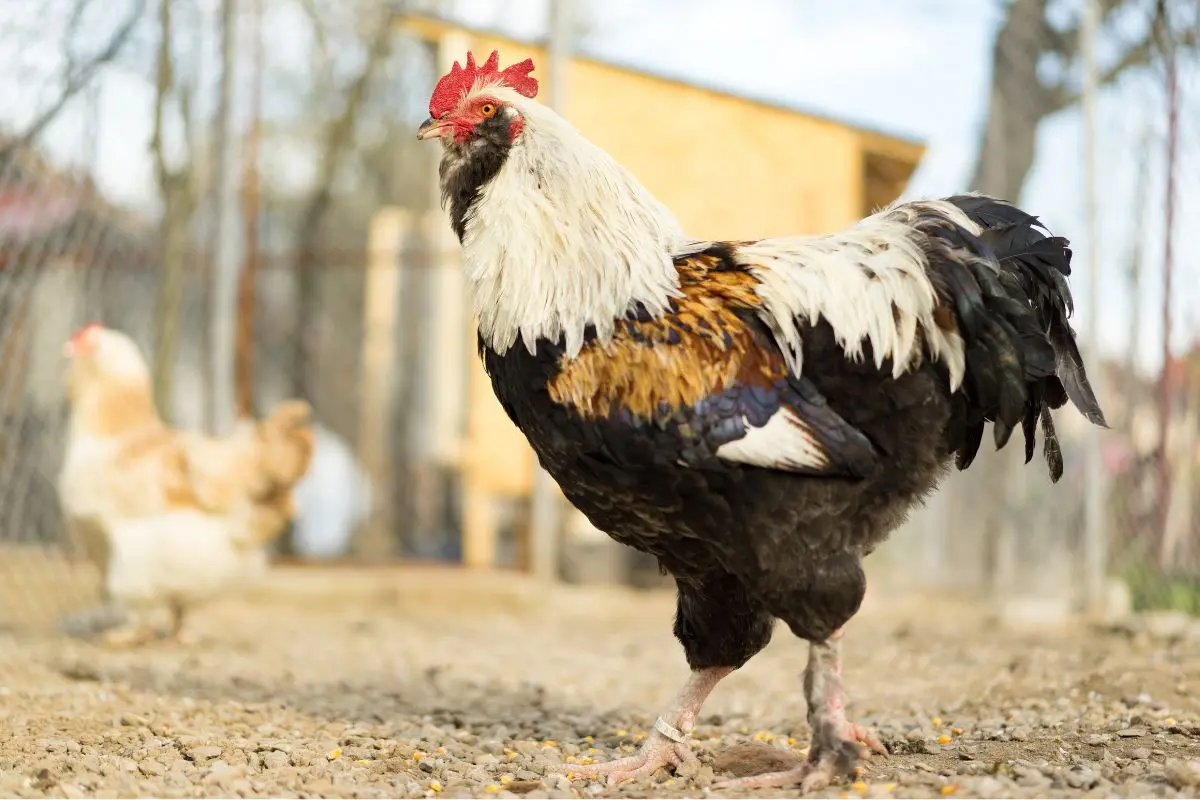
Picture a Faverolles in your yard—fluffy and round, like a feathered teddy bear. The Salmon hens glow with soft beige and pinkish-brown backs, while roosters strut in black, white, and red, tails fanned like a peacock. They’ve got beards, muffs, and feathered feet that scream “cute!”
- Physical Characteristics: Stocky and plump—6–9 pounds—with slate-blue legs poking out from fluffy shanks. That Salmon combo is a stunner, Whites are crisp, and others pop with color.
- Comb Type: Single comb, small and red—tucked under all that fluff.
- Crested? Toes? Feathers?: No crest, five toes (a Houdan throwback), and feathered legs—extra cozy.
- Breed Standards: The APA (since 1914) loves that bearded face, five toes, and rich Salmon or White hues.
They’re a fluffy delight—built for charm and cold mornings alike.
Faverolles Breed Characteristics
Faverolles are the sweethearts of the flock—gentle, chatty, and ready to make friends. They’ve got a softness that warms your heart, like a feathered pal who’s always up for a visit.
- Climate Tolerance: Cold’s their jam—those feathers and muffs keep them toasty. Heat’s fine with shade and water, but they’re not fans of tight coops—give them room to breathe.
- Temperament: Docile and darling—they’ll follow you around, clucking like they’re telling stories. Roosters are calm guardians, rarely scrappy, and they’re great with kids or shy birds. They love a treat from your hand!
- Motherhood: Not super broody, but when they sit, they’re champs—nurturing and patient with their chicks.
They’re easygoing fluffballs—perfect for a homestead that values peace and cuddles.
How to Care for Faverolles
Faverolles are a joy to raise—low-fuss, just a bit fancy with those feathers. Feed them a 16% protein layer mix, toss in grit and calcium, and they’ll peck at veggie scraps or mealworms with glee. Keep water fresh—they’re messy drinkers with those beards.
- A spacious coop’s best—4 square feet per bird inside, 8–10 outside. They’re big and fluffy, so no crowding.
- Dust baths keep them clean—set up some sand, and they’ll fluff up happy.
- Those feathered feet need checking—wet mud or snow can clump, so dry bedding’s a must in winter. Trim feathers if they get matted.
They’re hardy but pampered—keep their fluff dry, and they’ll thrive like the charmers they are.
Where to Buy Faverolles
Ready to bring some Faverolles home? I’d start local—find a hatchery or farmer nearby. It’s gentler on the chicks—no bumpy rides—and they’ll settle in quick with a cheerful cluck. If that’s a no-go, swing by your farm store and ask them to order some with their next hatchery batch. It’s a smooth trip from there to you, less worry all around.
Shipping’s tough on these fluffy ones—bouncing through the mail can ruffle their feathers. But if you’re stuck, Murray McMurray Hatchery’s a solid choice. We’ve gotten healthy chicks from them, and lots of stores work with them too—just order local if you can. Soon, you’ll have French fluff waddling your way!
Wrap UP
Faverolles are a homestead treat—soft, sweet, and ready to bring a little love to your flock. They’ll give you tasty eggs, decent meat, and a whole lot of personality, all wrapped in that adorable fluff. They need space and a dry spot in winter, but if you’ve got a heart for gentle birds that shine in the cold, they’re your pick. I’d take their friendly chirps and cuddly looks any day—they’re like the warm hugs of the chicken world.
Got Faverolles in your coop—or thinking about them? Pop a note in the comments—I’d love to hear your tales or help with any questions. Let’s keep the chicken love flowing!