There is something hopeful about fruit tree planting. You dig one hole, set in a bare little tree, and you are betting on years of blossoms and fruit you have not tasted yet. It feels like a big move, but it turns out to be one of the friendliest things a new gardener can do.
Maybe you have wanted your own apples or peaches for a while, but it seemed like something only orchard folks knew how to pull off. Here is the good news. A young tree does not ask much of you. It wants the right spot, an honest hole, protection from graziers, and a little attention through the first year. Give it those, and the tree does the rest.
- Fruit Tree Planting Starts With the Right Tree (Match It to Your Place)
- Planting Local Beats Planting Fancy (A Colorado Apple Story)
- The Best Time for Fruit Tree Planting (Fall and Early Spring)
- Fruit Tree Planting Step by Step (Dig, Set, Backfill, Water)
- Caring for Your Tree the First Year (Water, Mulch, Patience)
- Your Fruit Tree Planting Checklist (Quick Recap)
- FAQs: Fruit Tree Planting and Care
Fruit Tree Planting Starts With the Right Tree (Match It to Your Place)
Before you dig anything, pick a tree that actually wants to live where you live. This is the step most beginners skip, and it is the one that saves the most heartache. A gorgeous catalog variety does you no good if it cannot handle your winters or your summers.
Walk through these before you buy:
- Your growing zone. Every fruit tree has a range it can survive in. Check your zone and buy inside it.
- Chill hours. Many fruit trees need a set number of cold hours each winter to fruit well. Warm-climate gardeners want low-chill varieties.
- Space and size. Dwarf trees fit small yards and pots. Standard trees need room to stretch. Read the tag.
- Pollination. Some trees fruit on their own. Others need a second variety nearby to set fruit, so ask before you buy a single lonely tree.
- Disease resistance. A tough, resistant tree forgives a lot of beginner mistakes.
Match the tree to your soil, too. Fruit trees hate wet feet, so a spot with well-drained soil and six or more hours of sun gives you the best odds.
Planting Local Beats Planting Fancy (A Colorado Apple Story)
A while back, I took a grafting class from a local orchardist whose family has worked the same Colorado land since the 1800s. Walking her rows felt like stepping into an old-growth forest. Those apple trees have been producing for generations, and every spring she opens her orchard to teach folks how to keep those lines going.
We grafted heritage scions onto rootstock, kept them potted through the summer, and set them in the ground that fall. They are thriving now, in ground that is not easy to grow in. I did not choose those apples because they were rare or fancy. I chose them because they were already proven within a handful of miles of my own land.
That is the real lesson. Wherever you live, look around first, and talk to a local orchardist or old farming/ranching families about what’s tucked away in corners of the old family land, what grows well, and what does not.
If you can get scions, starts, or grafted trees from someone close by, you are planting something the land already knows how to grow. The part I did not expect to love so much was the people I met in that class, neighbors who cared about the same old skills I do. The fruit is the payoff. The company is its own reward.
Grafting those trees is a whole story for another day. We have a grafting eCourse coming out next year, so if that sparks something in you, hop on the newsletter, and I will make sure you hear about it first. (Hint: It will be 100% FREE to members of The Farmer’s Lamp community!)
The Best Time for Fruit Tree Planting (Fall and Early Spring)
Timing matters more than beginners expect. The goal is to plant while the tree is dormant, meaning it is resting and not pushing new leaves. That is fall after the leaves drop, or early spring before the buds break.
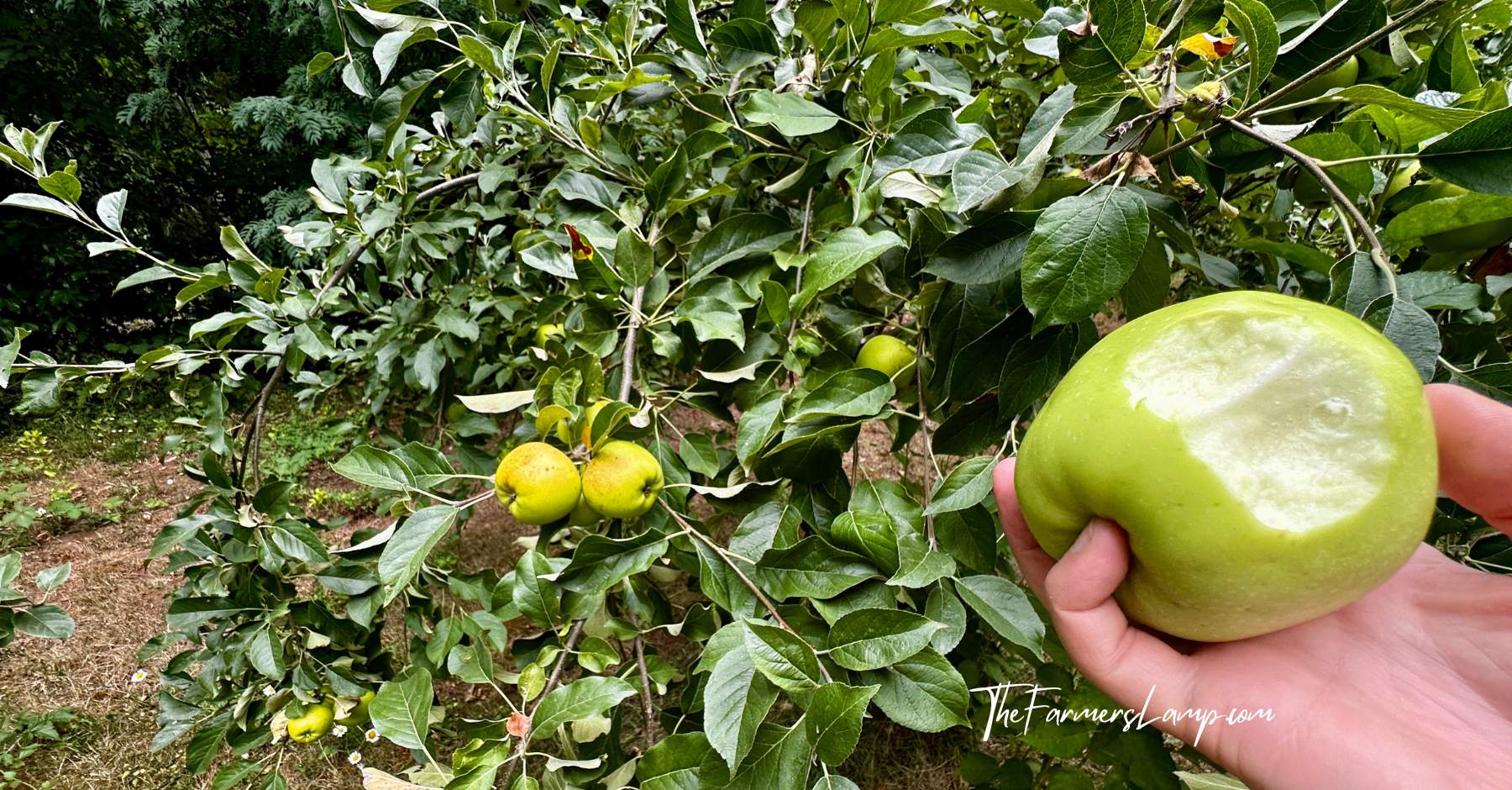
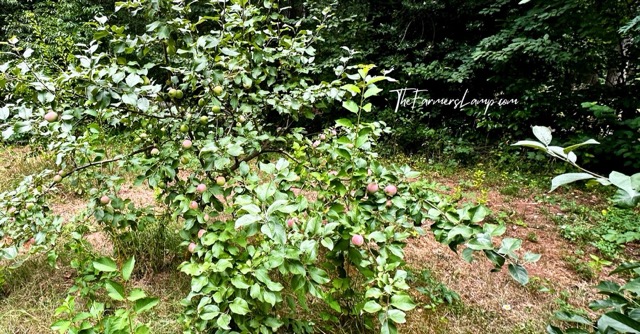
A dormant tree spends its energy on roots instead of leaves, so by the time hot weather arrives, it can pull water through a stronger root system. My grafted apples went in during fall and came through their first winter, settled and ready.
And their mettle has been fully tested with the driest winter and now the hottest summer on record. They are pulling through that well, although one of them had a surprise in store for me the other day. More on that in the grafting course coming soon.
You will usually buy trees one of two ways:
- Bare-root trees arrive dormant with no soil on the roots. They cost less, plant easily, and go in during late winter or early spring.
- Potted trees come in a container with soil. They cost a bit more and give you a wider planting window, though you still want to skip the peak of summer heat.
Fruit Tree Planting Step by Step (Dig, Set, Backfill, Water)
Here is the part that feels intimidating and turns out to be simple. Take it one step at a time.
- Dig a hole as deep as the roots and two to three times as wide. Wide matters more than deep, because young roots need loose soil to spread into.
- Rough up the sides of the hole with your shovel so the roots push through instead of circling. Sculpt the sides of the hole like a shallow bowl, not vertical edges, as that will also cause the roots to circle instead of growing outwards into a stable foundation.
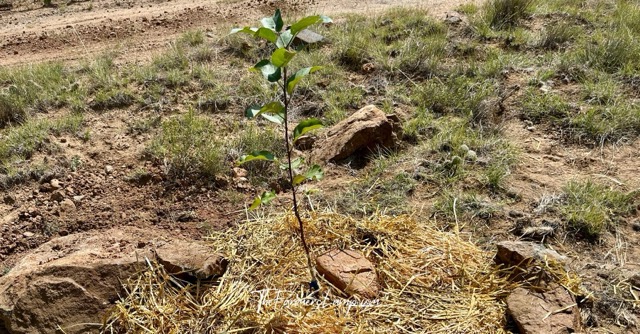
- Set the tree so the graft union, that swollen knob near the base, sits a couple of inches above the soil line. Burying it invites rot and unwanted shoots.
- Backfill with the same native soil you dug out. The Colorado State University Extension recommends this over filling the hole with rich compost, which can trap water and keep roots from reaching into the surrounding ground.
- Firm the soil gently with your hands to close air pockets. Do not stomp it into concrete.
- Build a low ring of soil around the edge to hold water, then water deeply and slowly.
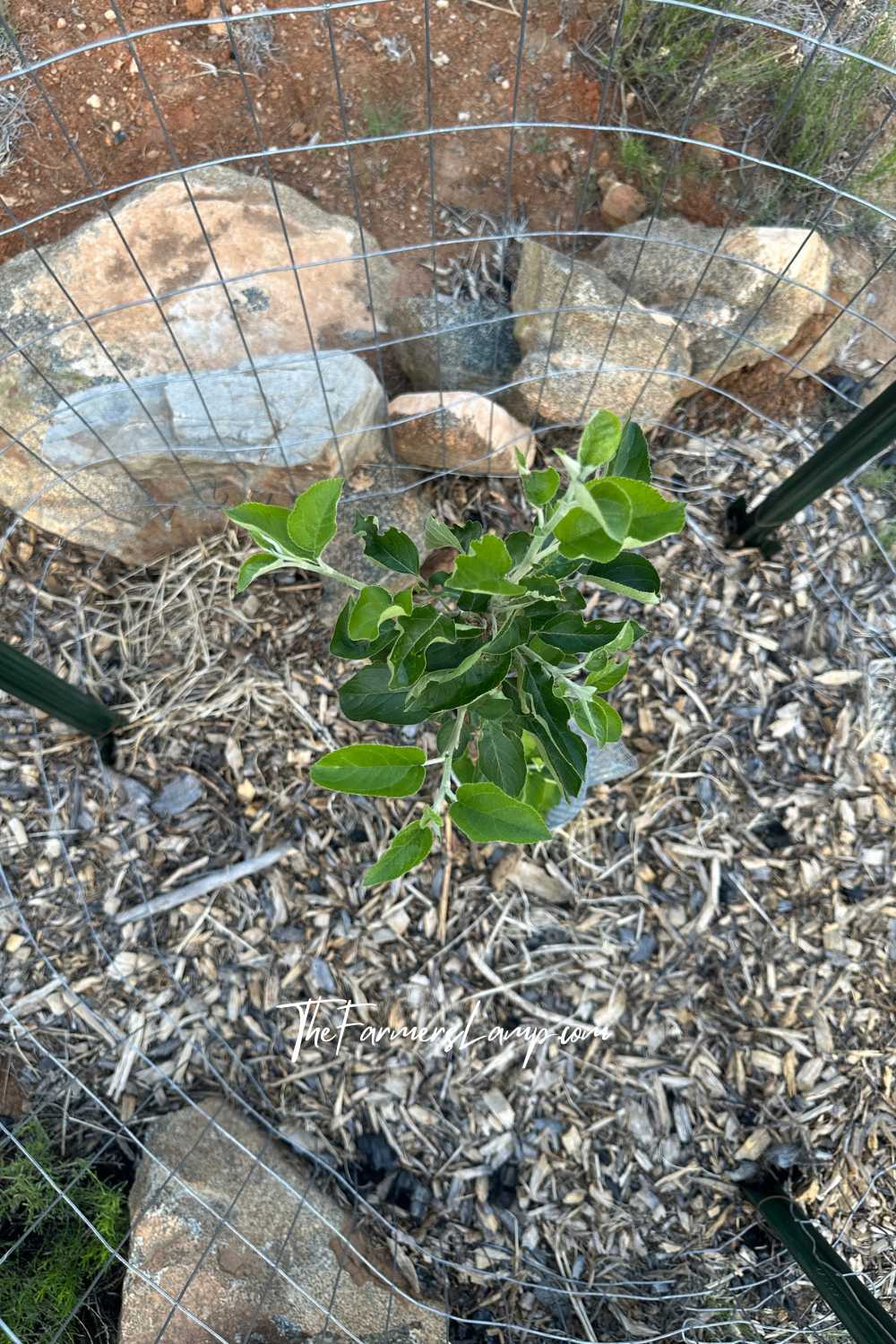
- Spread mulch in a wide ring, keeping it a few inches back from the trunk. Mulch piled against the bark rots it.
- Stake the tree only if it is windy or leaning. Most trees grow stronger when allowed to sway a little.
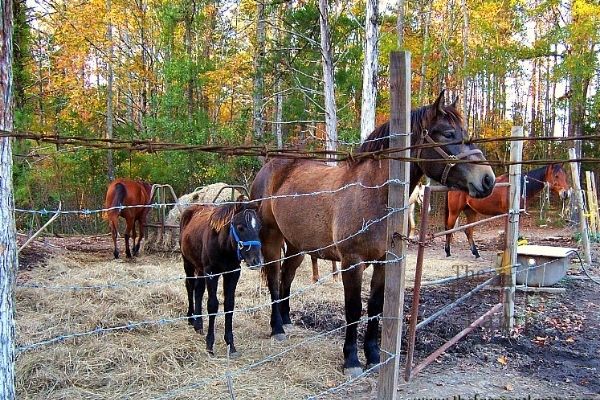
- If graziers, wild or domestic, are able to reach those dear sweet new leaves, I recommend protecting your new fruit tree investment with fencing.
Caring for Your Tree the First Year (Water, Mulch, Patience)
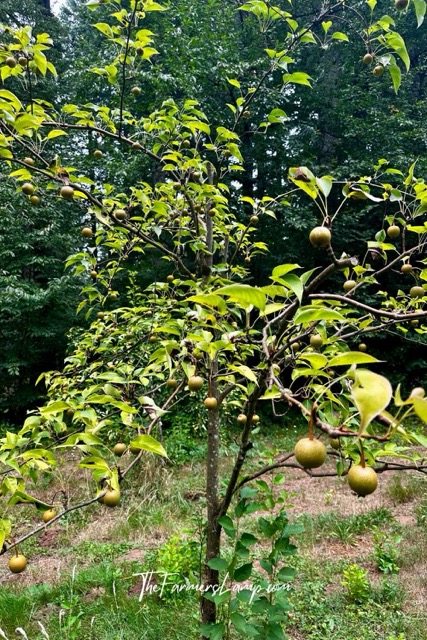
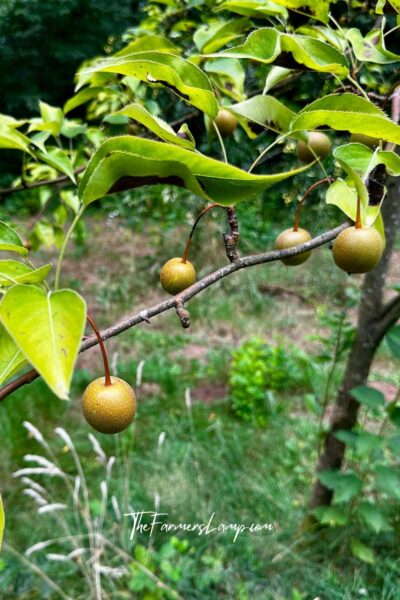
The first year is about roots, not fruit. Water deeply once or twice a week when there is no rain, letting it soak down rather than sprinkling the surface. If your young tree tries to set fruit that first season, pinch those blossoms off. A baby tree that spends its strength on a few apples grows weaker instead of building the roots and frame it needs.
Keep an eye out for hungry visitors. Rabbits, deer, and voles love tender bark, so a simple trunk guard or a ring of fencing protects your work. If pests show up on the leaves, catch them early with gentle organic pest control before they get a foothold.

Your Fruit Tree Planting Checklist (Quick Recap)
- Pick a variety suited to your zone, chill hours, and space.
- Choose a sunny spot with well-drained soil.
- Plant while dormant, in fall or early spring.
- Dig wide, not deep, and keep the graft union above the soil.
- Backfill with native soil, then water deeply.
- Mulch in a ring, held back from the trunk.
- Water through the first year, and be patient with the fruit.
Follow that list, and you have done right by your tree. The rest is time, and time is the one thing a fruit tree is very good at using. Once the harvest rolls in, you can put up the extra with home canning and taste your patience all winter long.
FAQs: Fruit Tree Planting and Care
How long does it take for a fruit tree to bear fruit?
Most fruit trees start producing in two to four years, depending on the type and rootstock, and dwarf trees often fruit sooner than standard ones. Pinching blossoms the first year feels slow, but it builds a stronger tree that fruits better for decades.
What is the best time of year for fruit tree planting?
Plant while the tree is dormant, which means fall after the leaves drop or early spring before buds break. Dormant trees put their energy into roots and settle in before summer heat. Avoid planting in the middle of a hot, dry stretch.
Do I need two fruit trees to get fruit?
It depends on the variety. Some fruit trees are self-pollinating, but many apples, pears, and sweet cherries need a second compatible variety nearby to set fruit. Check the tag or ask the grower before you buy a single tree.
How deep should I plant a fruit tree?
Plant it so the roots sit at the same depth they grew before, with the graft union a couple of inches above the soil line. Dig the hole wide rather than deep. Planting too deep is one of the most common reasons young trees struggle.
Can I plant fruit trees in a small yard or in pots?
Yes. Look for dwarf or semi-dwarf varieties bred for tight spaces. A large pot with drainage holes, good soil, and six or more hours of sun can grow a productive tree on a patio or balcony, though container trees need more frequent watering.
Why are my new fruit tree’s leaves wilting?
The usual causes are too little water, too much water, or transplant shock. Check the soil a few inches down. If it is dry, water deeply; if it is soggy, ease off and make sure the spot drains. A little wilt right after planting is normal as the tree settles.
Fruit tree planting is one of those quiet acts of hope that pays off for years. Plant one this season, tend it through the first year, and you will be picking your own fruit before you know it. Have a question about a tree you are eyeing, or a story about one you have already planted? Leave a comment and let’s talk it through.
Want more fruit tree help like this? Become a Friend of the Farmer’s Lamp for free. Join The Farmer’s Lamp newsletter to get homestead support from folks just like you.